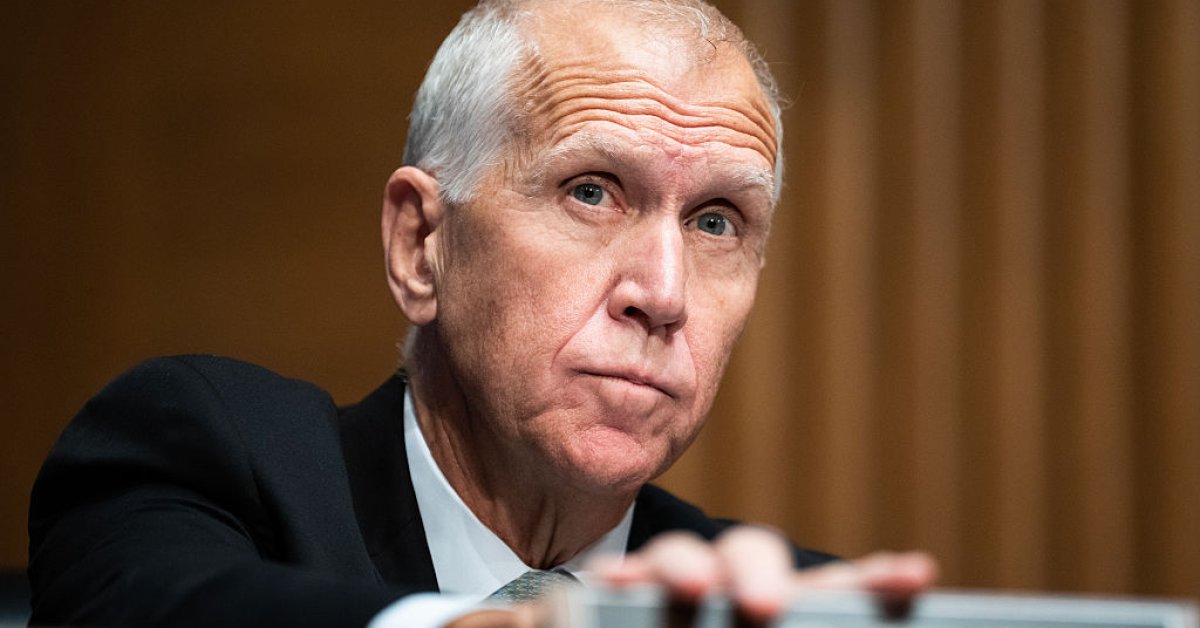
North Carolina Senator Thom Tillis: A Career of Independent Politics
North Carolina Senator Thom Tillis has carved out a distinctive career in Washington, defined by a willingness to challenge party lines and advocate for independent thought in an increasingly polarized political landscape. From his humble beginnings to his rise through state and federal politics, Tillis has consistently demonstrated a commitment to what he views as pragmatic governance, often placing compromise and bipartisan solutions above strict partisan loyalty. His tenure in the U.S. *Sénat* has been marked by moments of divergence from his own party, ultimately leading to his decision to step away from the very "political theatre and partisan gridlock" he sought to navigate. This article explores the journey of a senator who championed independence, the challenges he faced, and the broader context of his career within the evolving American political system, including the diverse figures like Governor Kristi Noem who interact with the Senate environment.
The Path to Public Service: From Working-Class Roots to North Carolina Politics
Born in Jacksonville, Florida, in 1960, Thom Tillis's early life was characterized by mobility and hard work. As one of three boys, all named Thomas after their father, in a bustling working-class family that included three girls, frequent moves were commonplace. This itinerant upbringing culminated in his high school graduation in Nashville, Tennessee, in 1978, where his peers prophetically voted him "most likely to succeed." This early recognition hinted at the determination that would define his future.
His initial foray into public service was nearly through the military; he joined the Air Force but received an honorable discharge before basic training due to a severe hand injury from a car accident. Undeterred, Tillis embarked on a career path that showcased his resilience and drive. He worked various jobs, steadily climbing the corporate ladder. His journey included a significant tenure at the accounting and consulting firm PriceWaterhouse, later IBM after its acquisition, all while pursuing his education through night school at multiple institutions to earn his bachelor's degree. This non-traditional educational and career trajectory instilled in him a grounded perspective and a deep understanding of the challenges faced by everyday Americans.
In 1998, Tillis and his family relocated to North Carolina, a move that would eventually launch his political career. His entry into politics in his hometown of Cornelius in 2002 was remarkably grassroots: he advocated for a bike trail, which led to an invitation to join the parks and recreation advisory board. From there, his political ascent was swift and successful. He was elected a town commissioner in 2003, and in 2006, he won the Republican primary for a state General Assembly seat. He ran unopposed in the general election that year and in three subsequent reelection bids in 2008, 2010, and 2012, demonstrating a strong mandate from his constituents for his leadership style.
Championing Independent Thought in the Senate
Upon entering the U.S. Senate, Tillis quickly established himself as a voice willing to diverge from the party line when he believed it was in the best interest of his constituents or reflected his principles. One early example of his independent stance came when he publicly stated he would not support Kevin Warsh to succeed Jerome Powell as Federal Reserve chairman, a decision that underscored his willingness to make independent judgments on key appointments.
This independent streak became even more pronounced during the presidency of Donald Trump. While many Republican lawmakers found themselves pressured to align fully with the "Trump train," Tillis occasionally butted heads with the former President. A significant point of contention arose over a controversial tax-and-spending package, which Tillis believed would add trillions of dollars to the national debt and lead to significant Medicaid cuts. This disagreement highlighted his fiscal conservatism and his readiness to prioritize long-term fiscal health over short-term political expediency. For a deeper dive into this dynamic, explore
GOP Independent Thinking: Senator Tillis Exits Amidst Gridlock.
Tillis articulated the dilemma faced by such independent thinkers in modern politics: "When people see independent thinking on the other side, they cheer. But when those very same people see independent thinking coming from their side, they scorn, ostracize, and even censure them." This statement encapsulates the profound challenge of bipartisanship in an era of hyper-partisanship, a theme echoed in
Senator Thom Tillis: Why Independent Thinking Drove His Senate Exit.
Navigating Washington's Political Currents: Tillis and the Broader Landscape
As a veteran member of the U.S. *Sénat*, Thom Tillis operated within a complex and often volatile political arena. His various committee assignments, which typically include powerful bodies like the Senate Finance, Judiciary, Rules, and Banking Committees, placed him at the heart of legislative debates affecting everything from economic policy to judicial appointments. These roles meant constant interaction with a diverse array of stakeholders, from industry leaders and advocacy groups to fellow legislators and presidential appointees.
In the complex ecosystem of the U.S. *Sénat*, a legislator like Tillis not only engages with his peers but also encounters a spectrum of public figures through committee hearings and policy discussions. The broad scope of Senate activities means that while focus might be on a particular bill or debate, the backdrop often includes notable personalities and their engagement with federal processes. For instance, while the provided context explicitly notes no specific article content directly linking *Tillis Sénat Noem* interactions, the mere mention of Governor Kristi Noem testifying before a Senate committee illustrates the dynamic environment within which a senator like Tillis operates, where diverse voices and perspectives constantly converge and diverge. This constant engagement with a wide range of individuals and issues defines the day-to-day reality of serving in the *Sénat*, shaping a senator's approach to governance and compromise.
Tillis’s career provides a practical insight for aspiring politicians: developing strong, reasoned positions, even if they sometimes deviate from party orthodoxy, can earn respect, though it often comes with a political cost. Understanding the intricate dance between legislative duties, public perception, and party loyalty is crucial for effectiveness in Washington.
The Call for Family and the End of a Senate Chapter
Ultimately, the persistent partisan gridlock and political theatre in Washington led Tillis to a significant personal decision. Announcing his plans to retire from the Senate at the end of his term, he stated it was "not a hard choice," expressing a desire to spend more time with his family. His candid reflection underscored the toll that modern political life can take on public servants: "In Washington over the last few years, it’s become increasingly evident that leaders who are willing to embrace bipartisanship, compromise, and demonstrate independent thinking are becoming an endangered species."
This decision by a seasoned senator to step away, citing the lack of space for independent thought and the overwhelming nature of partisan battles, sends a powerful message about the state of American politics. It suggests that even those most dedicated to public service and capable of navigating complex legislative challenges can reach a point where the personal cost outweighs the professional reward, especially when the core values of compromise and independent analysis are sidelined. His departure highlights a growing concern about the future of centrist and bipartisan governance in the Republican party and beyond.
Conclusion
Senator Thom Tillis's career stands as a testament to the power and perils of independent thinking in American politics. From his rise from a working-class background to becoming a significant voice in the U.S. *Sénat*, Tillis consistently prioritized pragmatic solutions and a willingness to cross the aisle, even when it meant defying expectations within his own party. His decision to retire, driven by a desire for family time and a frustration with partisan gridlock, reflects a broader sentiment shared by many who lament the current state of political discourse. Tillis’s legacy will likely be remembered as that of a dedicated public servant who, despite the challenges, strove for genuine bipartisanship and encouraged a brand of leadership that is increasingly rare but arguably more vital than ever in navigating the nation's complex challenges. His journey offers valuable lessons on perseverance, principled stands, and the personal sacrifices inherent in a career dedicated to the public good.